Egg Donation and Donor Egg IVF in Mexico City and Metepec
Egg donation is an in vitro fertilization (IVF) treatment that uses eggs from a donor who has been evaluated and selected beforehand. It is designed for patients who cannot use their own eggs. The donated eggs are fertilized in the laboratory, and the resulting embryo is transferred to your uterus after your uterine lining has been prepared. At CEMPI we offer egg donation for patients in Mexico City (Benito Juárez) and Metepec, in the State of Mexico, after an individual medical evaluation and a counseling session.
Estimated duration
Embryo development in the laboratory takes 5 to 6 days after the donated eggs are fertilized.
Clinical area
Assessment by your treating physician and the procedure performed by embryologists and andrologists in our laboratory.
Where it is performed
Endometrial preparation is monitored in the consulting room using high-resolution ultrasound equipment. Embryo transfer takes place in an operating room reserved for fertility procedures; it is an outpatient procedure of 10 to 15 minutes that generally does not require sedation.
Support
The medical team and PLANEA staff will provide comprehensive, close follow-up throughout your treatment. Our commitment is to guide you through clear, transparent and timely communication.
Egg donation at CEMPI at a glance
- What it is: IVF with eggs from a donor who has been evaluated and selected, transferred to the recipient patient.
- Preparing your uterine lining: follow-up in the consultation room with a high-resolution ultrasound.
- Embryo development: 5 to 6 days in the laboratory.
- Cycle length: endometrial preparation and transfer usually take about 18 days.
- Transfer: an outpatient procedure of 10 to 15 minutes, guided by ultrasound, that generally does not need sedation.
- Payment: cash, credit or debit card, or financing over 2, 4, 6 and 9 months, subject to evaluation and approval.
- First step: a consultation and a counseling session.
What is egg donation?
Egg donation is an IVF treatment in which eggs from a donor who has been evaluated and selected beforehand are used. The embryos that form are transferred to the recipient patient after her uterine lining is prepared. This page is for patients who need to receive donated eggs.
Is egg donation the same as IVF?
It is IVF in which the eggs are not your own. The laboratory process and the transfer are those of in vitro fertilization. What changes is where the eggs come from, and that your treatment focuses on preparing your uterus rather than stimulating your ovaries.
Egg donation or embryo donation
In egg donation, embryos are formed with the donor's eggs and sperm from your partner or from a donor. In embryo donation, the embryo is already formed with donated eggs and donated sperm. Your doctor explains which option fits your case. If you need donated sperm, see donor sperm.
Who is egg donation for?
It may be recommended when your own eggs cannot be used. The decision is made after reviewing your medical history and tests, and after a counseling session where medical, legal and emotional questions are answered.
Situations where it is often recommended
- Low or absent ovarian reserve
- Premature ovarian failure
- Previous IVF cycles with a poor response
- Specific genetic conditions that you prefer not to pass on
What about age?
Egg quality declines with age, which is why egg donation is usually considered when ovarian reserve is low or when your own eggs no longer allow a pregnancy.
Counseling before you decide
Before starting, you have a counseling session to talk through the medical, legal and emotional questions calmly.
How is the egg donor chosen?
The donor is evaluated and selected before your treatment begins.
How egg donation works step by step
- 1.
Evaluation and counseling
We review your medical history and tests, assess your uterus and answer your medical, legal and emotional questions.
- 2.
Preparing the uterine lining
Medication is prescribed so that your lining is ready to receive the embryo. The preparation and transfer cycle usually takes about 18 days.
Ultrasound follow-up
It takes place in the consultation room with high-resolution ultrasound equipment.
What is checked at each visit
The thickness and appearance of the lining and, when indicated, lab tests. This decides the right moment for the transfer.
- 3.
Selecting the donated eggs and fertilization
The donor's eggs are selected and fertilized in the laboratory with sperm from your partner or from a donor.
- 4.
Embryo culture
Embryo development in the laboratory takes 5 to 6 days after the donated eggs are fertilized.
- 5.
Embryo transfer
The embryo is transferred to your uterus guided by ultrasound, in an operating room reserved for fertility procedures. It is an outpatient procedure of 10 to 15 minutes that generally does not need sedation.
- 6.
Pregnancy test
Your doctor will give you the date of the pregnancy test after the transfer.
How long does egg donation take?
Embryo development in the laboratory takes 5 to 6 days. The endometrial preparation and transfer cycle usually takes about 18 days. Your doctor sets your calendar after the evaluation and counseling.
Does the embryo transfer hurt?
The transfer takes 10 to 15 minutes and generally does not need sedation. You may feel mild discomfort. Because the donor is the one who undergoes ovarian stimulation and egg retrieval, you do not go through that part of the treatment.
Will my child look like me?
The baby's genes come from the egg donor and from the father or the sperm donor. Many patients want to talk this through calmly, and you can do it in the counseling session.
Technology and laboratory at CEMPI
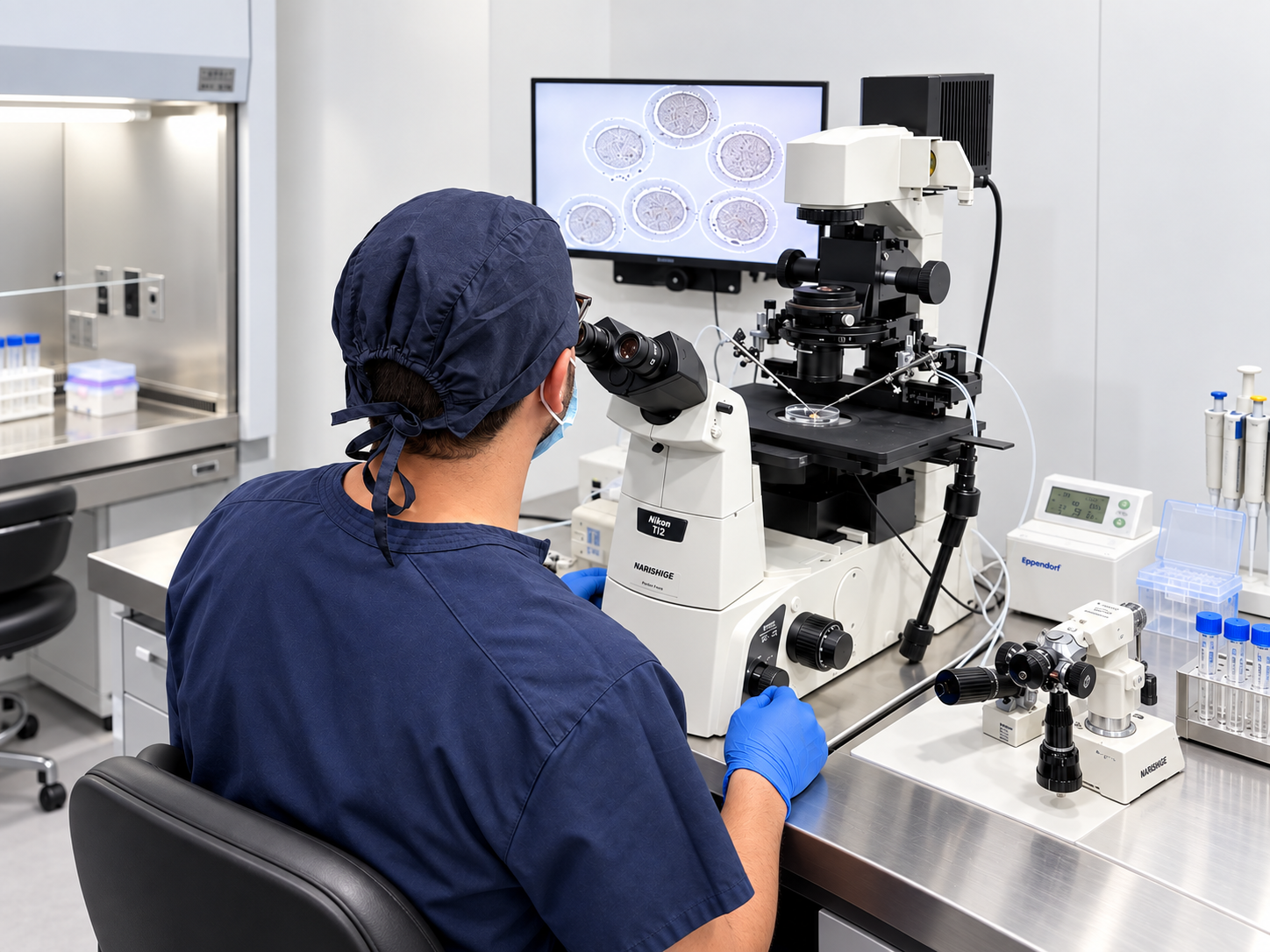
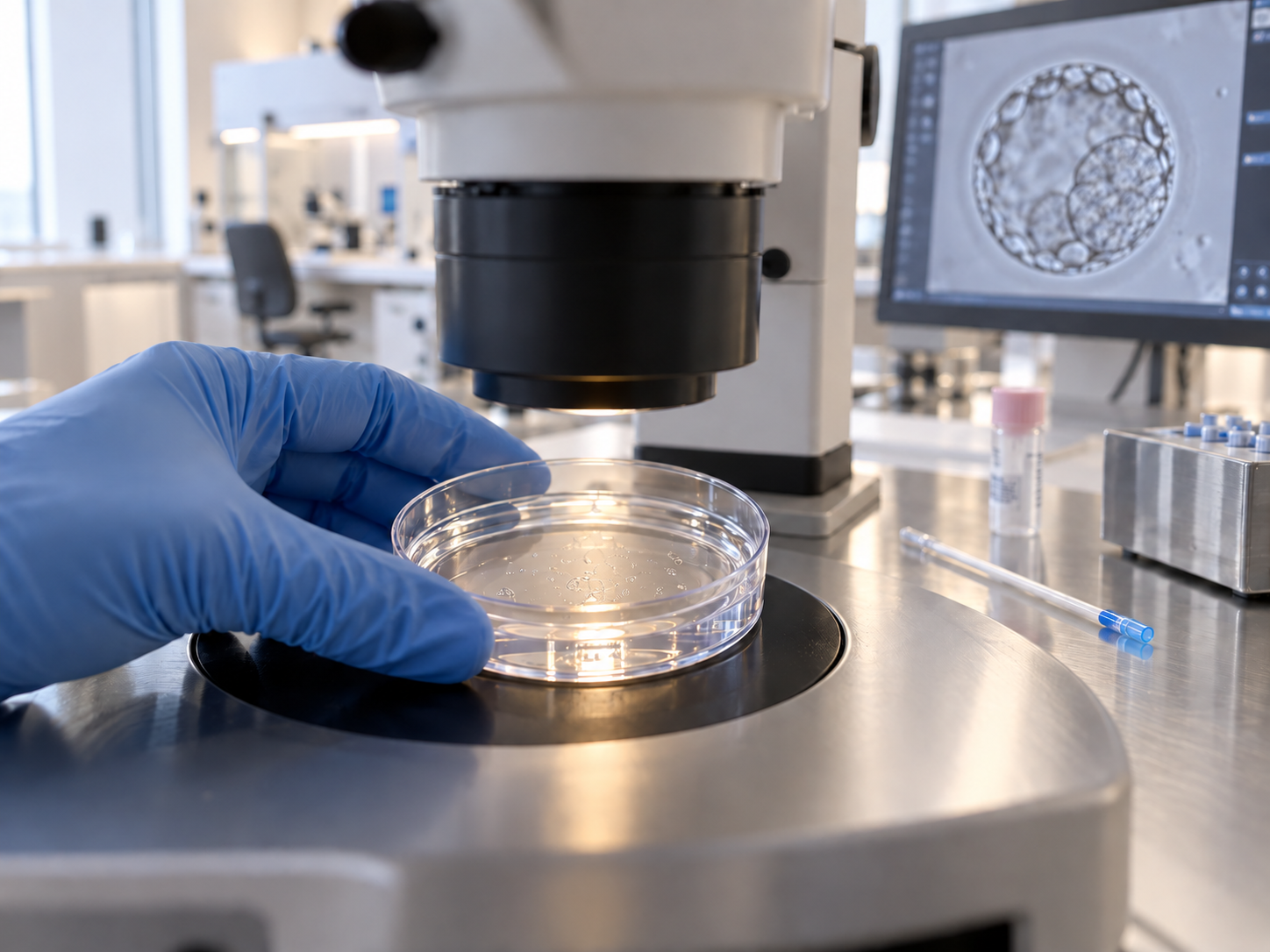
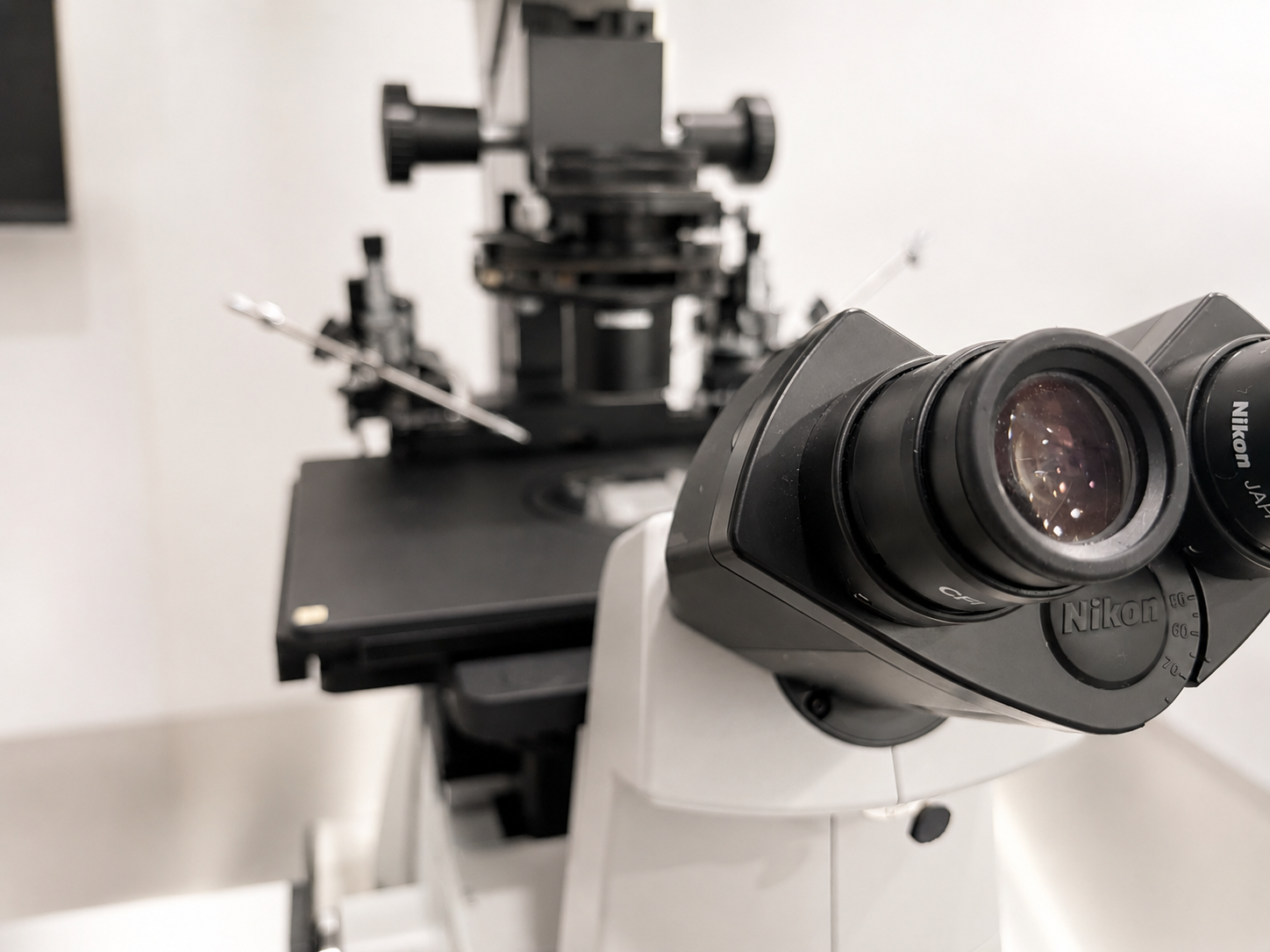
The transfer is guided by ultrasound, in an operating room reserved for fertility procedures. Embryos are evaluated by the laboratory through analysis of their morphology and development, and are graded according to established embryo-quality criteria. The procedures are performed by trained embryologists and andrologists.
Risks and considerations of egg donation
Preparation medication
The medication that prepares the lining may cause mild discomfort, such as breast tenderness, headache or mood changes. Your doctor explains how to take it and which signs should lead you to contact us.
Multiple pregnancy
If more than one embryo is transferred, the chance of a multiple pregnancy increases, which carries more risks. Your doctor explains how many embryos it makes sense to transfer.
Emotional and legal aspects
Using donated eggs can bring strong emotions and questions about identity and family. The counseling session is designed to support you in those decisions, together with your partner if you have one.
What affects the results of egg donation?
There is no single figure that applies to every patient, and no responsible doctor can guarantee a pregnancy. Results depend mainly on the donor's age and the quality of her eggs, embryo quality, semen quality, the condition of your uterus and your general health. At your consultation we explain what expectations are realistic in your case.
If you are traveling for egg donation
As the recipient, you do not undergo ovarian stimulation or egg retrieval, but you do need ultrasound follow-up while your lining is prepared and to be in Mexico for the transfer. See our guide for international patients.
Egg donation in Mexico City and in Metepec: choose your location
Mexico City, Benito Juárez
Open Monday to Friday from 8:00 a.m. to 4:30 p.m. and Saturday from 8:00 a.m. to 2:00 p.m. See the location page for the map and directions.
Metepec (Toluca), State of Mexico
Open Monday to Saturday from 10:00 a.m. to 2:00 p.m., by appointment. It is the closest option if you live in the Toluca Valley. See the location page.
Egg donation cost and payment options
The cost of egg donation depends on the procedure indicated and the characteristics of your case. That is why we define it after your evaluation and give you a written proposal.
What affects the cost
The recipient's tests, the medication that prepares the lining, the evaluation and selection of the donor, fertilization and embryo culture, the transfer, and additional services such as embryo vitrification or genetic testing. Always ask what a proposal includes and what is charged separately.
Your proposal with PLANEA
PLANEA is the CEMPI team that prepares and presents financial proposals. A financial advisor explains the investment in your treatment and the options available, with clear and transparent information.
Payment methods
You can pay in cash, by credit or debit card, or with financing over 2, 4, 6 and 9 months, subject to evaluation and approval. See costs and promotions and financial planning. Prices are quoted in Mexican pesos.
Preparing for your consultation
If you can, bring previous ultrasounds, hormone tests, reports from earlier IVF cycles and a list of your medication. Write down your questions, including the emotional ones. If you come as a couple, both of you take part in the evaluation. Learn more at first visit.
Medical information you can trust
This content was reviewed by CEMPI's medical director, Dra. Eva Bonifacio León, Medical Director. It is based on guidance from the World Health Organization, the American Society for Reproductive Medicine (ASRM) and the European Society of Human Reproduction and Embryology (ESHRE).
Frequently asked questions about egg donation
Everything starts with a consultation. Your treating doctor reviews your history, tests and goals, and defines with you whether egg donation is the best option for your case.
Related services
Book your egg donation consultation
Every plan is built from your diagnosis, not from a standard protocol. Message us on WhatsApp or call, choose the Mexico City or Metepec location, and take the first step with clear information.
This information is educational and does not replace a medical evaluation. Your treatment plan will be set individually by your doctor. Results vary and cannot be guaranteed.