
In Vitro Fertilization (IVF) in Mexico City and Metepec
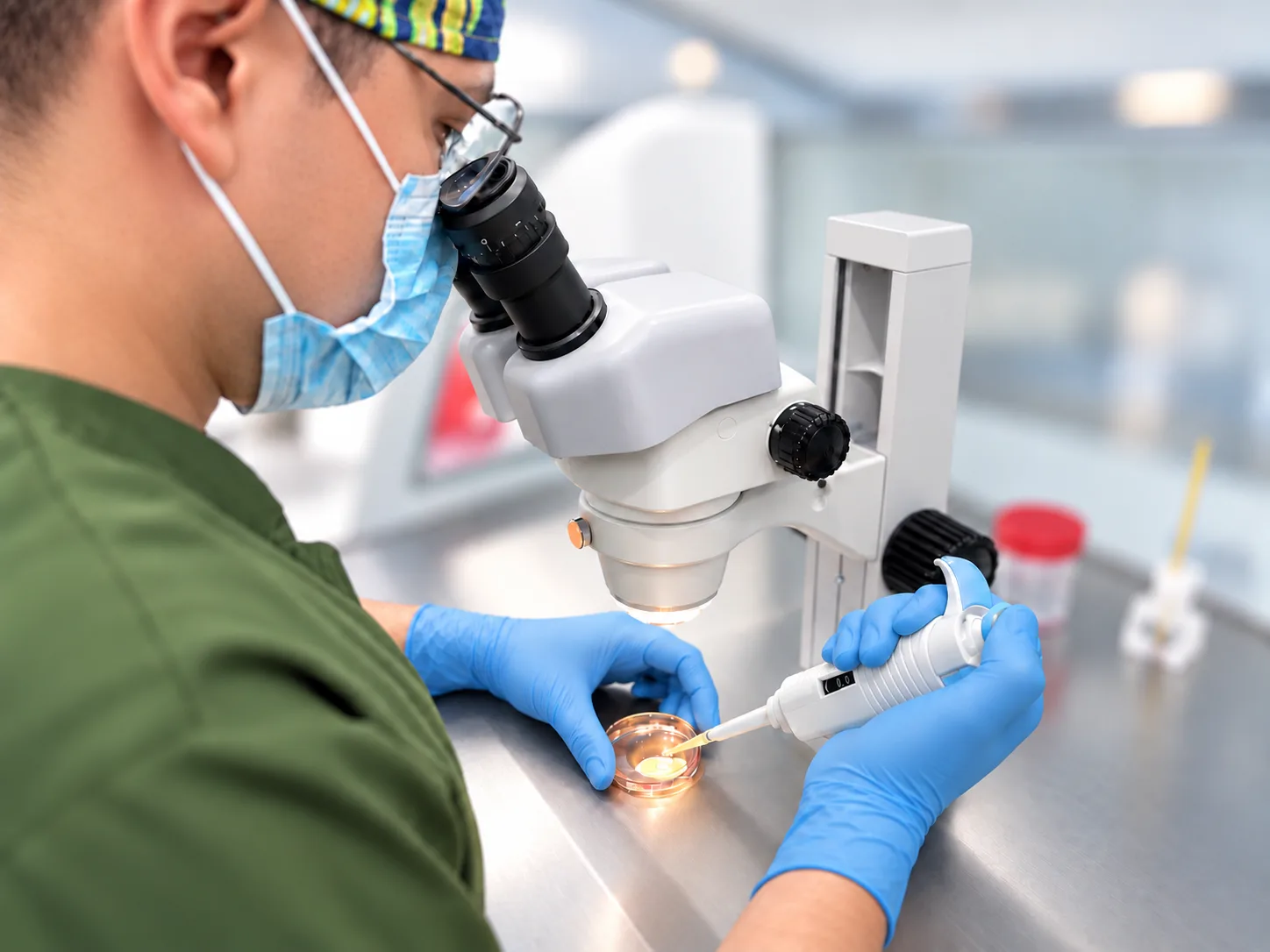
In vitro fertilization (IVF) is an assisted reproduction treatment in which eggs are fertilized with sperm in the laboratory, and one or more embryos are then transferred to the uterus. At CEMPI we perform IVF at two locations: Mexico City (Benito Juárez) and Metepec, in the State of Mexico. Every treatment starts with a medical evaluation of both partners and a plan built for your case, not a standard protocol. We welcome patients from Mexico and from abroad.
Estimated duration
The active ovarian stimulation phase usually lasts approximately 10 to 14 days, followed by follicular aspiration and embryo culture in the laboratory.
Clinical area
Ovarian stimulation is supervised in consultation with your treating physician using ultrasound and some laboratory tests. On average you will come in for review two to three times over these 10 to 14 days.
Where it is performed
It is performed in an operating room used exclusively for fertility procedures, free of bacteria, fungi, parasites and airborne particles. Follicular aspiration is an outpatient procedure lasting approximately twenty minutes, under sedation.
Support
The medical team and PLANEA staff will provide comprehensive, close follow-up throughout your treatment. Our commitment is to guide you through clear, transparent and timely communication.
IVF at CEMPI at a glance
- What it is: a high-complexity treatment in which fertilization happens in the laboratory.
- Ovarian stimulation: 10 to 14 days, with two to three monitoring visits.
- Egg retrieval: an outpatient procedure of about twenty minutes, under sedation.
- Locations: Mexico City (Benito Juárez) and Metepec (Toluca), State of Mexico.
- Payment: cash, card, or financing over 2, 4, 6 and 9 months, subject to evaluation and approval.
- First step: a consultation with your treating doctor.
What is IVF and how does it work?
In vitro fertilization is an assisted reproduction procedure in which eggs are collected from the ovaries, fertilized in the laboratory, and the resulting embryos are cultured for a few days before being transferred to the uterus or frozen. It can make pregnancy possible when natural conception is not possible or is very difficult.
The process combines medication to stimulate the ovaries, a short procedure to collect the eggs, specialized embryology work, and finally the embryo transfer. Your doctor adapts every stage to your age, ovarian reserve, diagnosis and your partner's results.
Conventional IVF, ICSI and PICSI
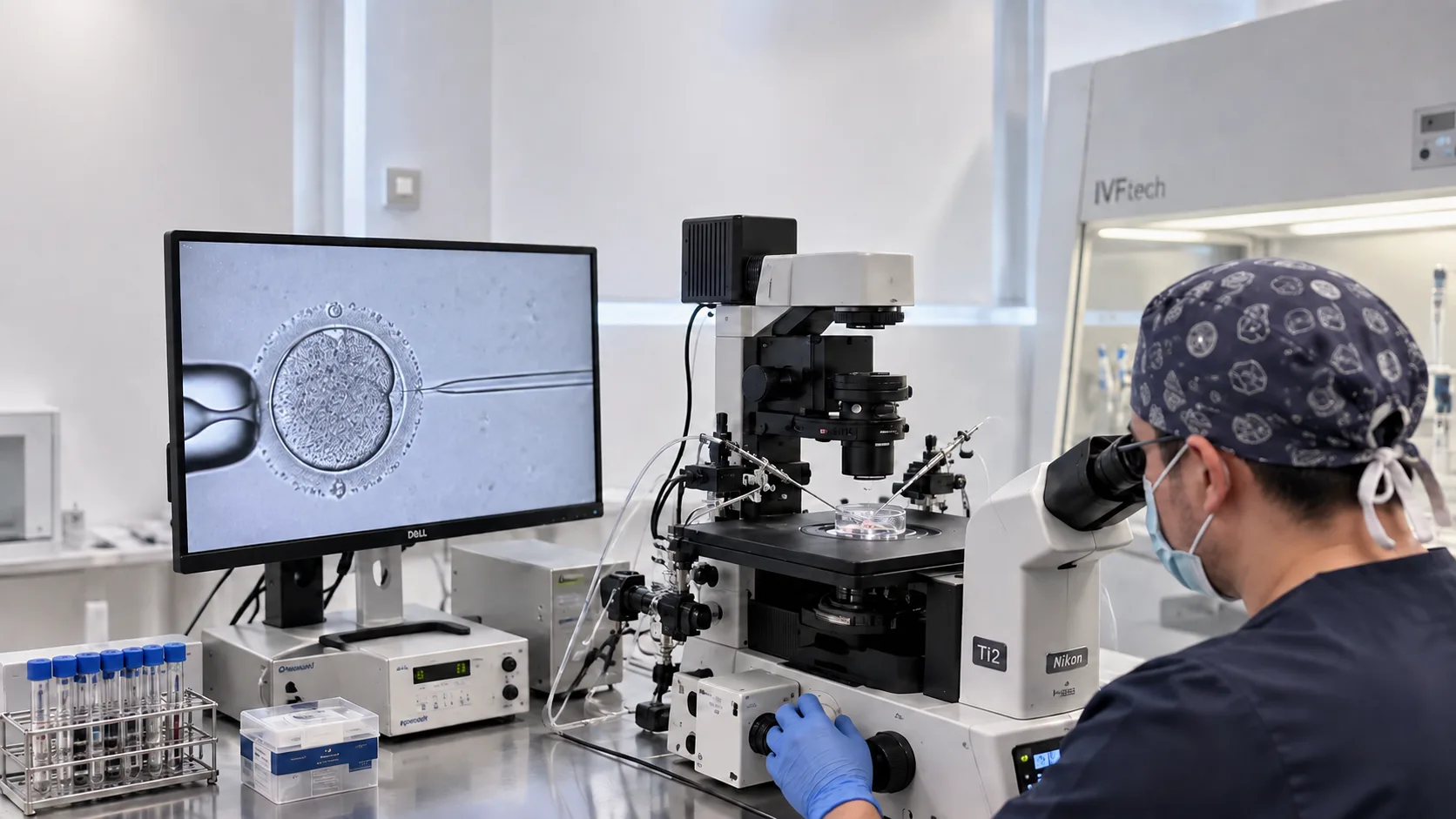
In conventional IVF, eggs and sperm are placed together so fertilization can happen. In ICSI, a single sperm is injected into each mature egg, and in PICSI sperm are selected according to their maturity. The embryologist and your doctor choose the technique based on the eggs and the semen sample.
Who is IVF for?
IVF may be considered when a cause makes natural pregnancy difficult, or when other treatments have not worked. The final recommendation depends on your diagnosis and is made by your treating doctor after reviewing your tests.
Situations where IVF is often recommended
- Tubal factor: blocked or damaged fallopian tubes
- Male factor: changes in sperm count, movement or shape
- Endometriosis
- Low ovarian reserve
- Unexplained infertility
- Previous unsuccessful attempts with intrauterine insemination or other treatments
Age and ovarian reserve
The number and quality of eggs decline with age, so after 35 it is wise not to wait too long before seeking an evaluation. Ovarian reserve is assessed with ultrasound and hormone tests and helps decide which treatment and which stimulation protocol are suitable.
When do other treatments come first?
If the tubes are open and the semen parameters are adequate, your doctor may suggest intrauterine insemination or timed intercourse first. IVF is not always the first step. It is the most appropriate option when the diagnosis points to it.
How IVF works step by step
1. Initial evaluation and tests for both partners
The process starts with a consultation. We review your medical history and previous tests and request the ones that are missing, such as ultrasound, hormone tests and a semen analysis. With that information your doctor defines the protocol and the calendar.
2. Ovarian stimulation with ultrasound monitoring
Medication is prescribed to encourage several mature eggs to develop in one cycle. The active stimulation phase usually lasts about 10 to 14 days.
Monitoring visits
During these days you will visit your treating doctor on average two to three times.
What is checked at each visit
Follicle growth is measured by ultrasound and some blood tests are reviewed. The dose is adjusted, and the exact timing of the egg retrieval is decided.
3. Egg retrieval and semen sample
Eggs are collected in an outpatient procedure of about twenty minutes, under sedation, in an operating room reserved for fertility procedures. The semen sample is obtained the same day. After a short recovery period, you go home.
4. Fertilization in the laboratory and embryo culture
The embryology team fertilizes the eggs with the technique that fits your case and cultures the embryos in specialized incubators. Their development is observed for several days until they reach the stage suitable for evaluation, transfer or freezing.
5. Embryo transfer or vitrification
Depending on your case, an embryo is transferred to the uterus or the embryos are vitrified (frozen) to be transferred in a later cycle. When genetic testing, freezing or a deferred transfer is involved, treatment continues into a following cycle.
Fresh embryo transfer
The embryo is placed in the uterus in the same stimulation cycle when medical conditions allow it.
Frozen embryo transfer
It takes place in a later cycle, with the uterine lining prepared to receive a previously vitrified embryo.
6. Pregnancy test
Your doctor will give you the date of the pregnancy test after the transfer. In the meantime, we explain what to do and which symptoms should lead you to contact us.
How long does IVF take?
Ovarian stimulation lasts about 10 to 14 days, followed by egg retrieval and embryo culture in the laboratory. With a fresh transfer, the whole cycle can take a few weeks. If genetic tests are done or embryos are frozen, treatment includes a later cycle for the transfer. Your doctor sets your exact calendar at the initial evaluation.
Planning IVF in Mexico as an international patient
Traveling for treatment is easier with a clear plan. We help you reduce trips and know what to expect before you book flights.
Start with a remote consultation
Before you travel, you can share your medical records and talk with our team to understand your options.
Do part of the testing near home
Many blood tests and ultrasounds can be done where you live and sent to us, so your time in Mexico is used for what must happen here.
Know how many visits you need and how long to stay
The length of your stay depends on the treatment. A frozen embryo transfer usually needs a shorter stay than a full cycle with egg retrieval. You will receive a written timeline based on your case. See our guide for international patients.
Documents to bring
Previous test results, medical reports, a list of current medication and a valid passport.
Technology and embryology laboratory at CEMPI
Laboratory quality affects how embryos develop. This is what we use and why it matters.
Selecting the best embryos
The laboratory closely monitors embryo development. Embryos are evaluated and graded by their morphology to choose the best candidates for transfer.
Specialized incubators
Incubators maintain the conditions needed for embryo development, aiming to mimic the environment of the female body.
Freezing and vitrification
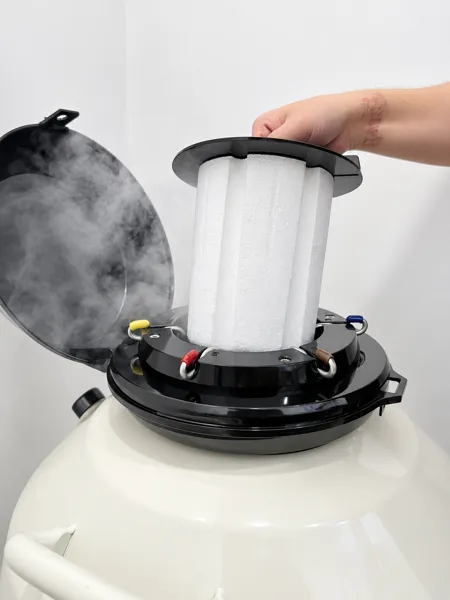
Freezing allows embryos, eggs and sperm to be stored for days, months or years. It is the basis of fertility preservation and of frozen embryo transfers.
Preimplantation genetic testing (PGT)
Preimplantation genetic testing can check the number of chromosomes or detect a specific genetic condition. It is not needed for every patient. It is done with two techniques.
Embryo biopsy
Using a laser, a small sample of six to eight cells is taken from the outer layer of the embryo on day five of development.
Non-invasive testing (niPGT)
Genetic material that the embryo releases into the culture medium is analyzed, without a biopsy, to learn about its chromosomes.
Risks, discomfort and safeguards
IVF is a safe procedure when it is performed by a specialized team, but like any medical treatment it has risks and discomforts you should know before you decide.
During stimulation
You may feel bloating, breast tenderness or mood changes. In some patients, ovarian hyperstimulation syndrome can occur, an excessive reaction to the medication that is monitored with ultrasound and blood tests. Call us right away if you have severe pain, rapid weight gain or trouble breathing.
During egg retrieval
Mild pelvic discomfort and light vaginal bleeding are common. Serious complications, such as infection or heavy bleeding, are uncommon. The procedure is done under sedation and medical supervision.
Multiple pregnancy
Transferring more than one embryo increases the chance of a multiple pregnancy, which carries more risks for the mother and the babies. Your doctor will explain how many embryos it makes sense to transfer in your case.
Emotional well-being
Treatment can be emotionally demanding. Talking with your doctor, your partner and people you trust helps, and you can ask us about support options.
What affects IVF results?
There is no single number that applies to everyone, and no responsible doctor can guarantee an outcome. Results depend mainly on the woman's age, egg and sperm quality, ovarian reserve, the cause of infertility, embryo quality and the condition of the uterus. At your consultation we explain which factors matter most in your case and what expectations are realistic.
IVF in Mexico City and in Metepec: choose your location
IVF in Mexico City, Benito Juárez
The Mexico City clinic is open Monday to Friday from 8:00 a.m. to 4:30 p.m. and Saturday from 8:00 a.m. to 2:00 p.m. It is the most convenient choice if you live in or are visiting Mexico City. See the location page for the map and directions.
IVF in Metepec (Toluca), State of Mexico
The Metepec clinic is open Monday to Saturday from 10:00 a.m. to 2:00 p.m., by appointment. It is the closest option if you live in the Toluca Valley. See the location page and our page about IVF in Metepec and Toluca.
IVF cost and payment options
The cost of IVF is not the same for everyone because it depends on the procedure indicated and on the details of your case. That is why we define it after your evaluation and give you a written proposal.
What affects the cost
The stimulation protocol and medication, the fertilization technique (conventional, ICSI or PICSI), genetic testing, embryo vitrification, additional transfers and preliminary tests. Always ask what each proposal includes and what is charged separately.
Your proposal with PLANEA
PLANEA is the CEMPI team that prepares and presents financial proposals. A financial advisor explains the investment in your treatment and the options available, with clear and transparent information.
Payment methods
You can pay in cash, by credit or debit card, or with financing over 2, 4, 6 and 9 months, subject to evaluation and approval. See costs and promotions and financial planning. Prices are quoted in Mexican pesos.
Is IVF in Mexico safe? Quality and transparency
Safety depends on the clinic, not on the country. Ask any clinic to show its doctors' professional license numbers, its health authority permits, how risks and options are explained in writing, and who is responsible for your care. At CEMPI you can review our team's training on the team page.
Medical information you can trust
CEMPI's medical director, Dra. Eva Bonifacio León, is part of the CEMPI team. This content is based on guidance from the World Health Organization, the American Society for Reproductive Medicine (ASRM) and the European Society of Human Reproduction and Embryology (ESHRE).
Frequently asked questions about IVF
Everything begins with a consultation. Your treating doctor reviews your history, tests and goals, and decides with you whether IVF is the best option for your case. You can book it by WhatsApp or phone.
Related services
Book your IVF consultation in Mexico City or Metepec
Every plan is built from your diagnosis, not from a standard protocol. Message us on WhatsApp or call, choose the Mexico City or Metepec location, and we will help you take the first step with clear information.
This information is educational and does not replace a medical evaluation. Your treatment plan will be set individually by your doctor. Results vary and cannot be guaranteed.